
Cool On Craze:
An EXCLUSIVE Interview with
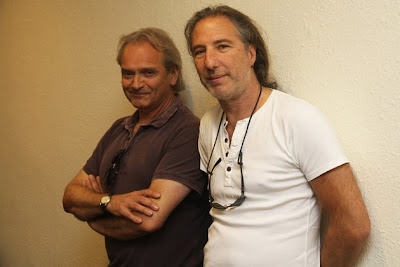
WANG CHUNG’s Jack Hues
By Stephen SPAZ Schnee
In 1986, there were very few people in the civilized world that didn’t feel the need to ‘Wang Chung tonight,’ although most of them didn’t know what Wang Chunging was! Well, all one had to do was look at the song title itself for inspiration: “Everybody Have Fun Tonight.” So, in essence, to ‘Wang Chung tonight’ meant to do whatever it took to have fun. And listening to Wang Chung was certainly part of that equation. But the Wang Chung story didn’t start there – their journey to success began nearly a decade earlier…
In 1977, musicians Jack Hues and Nick Feldman, who had already been through a few different bands together, formed an outfit called 57 Men which also featured drummer Darren Costin, bassist Leigh Gorman and vocalist Glenn Gregory. However, within a year and a half, the band split up. Gorman would later become bassist for a pre-fame incarnation of Adam & The Ants. This line-up of the Ants left Adam’s employment under the direction of manager Malcolm McLarenand formed Bow Wow Wow with Annabella Lwin. Vocalist Gregory would eventually find fame as the frontman in Heaven 17.
By 1980, Hues, Feldman (using the pseudonym Nick de Spig), and Costin (as Darwin) had formed Huang Chung. Releasing a few independent singles over the next year the band expanded their line-up by adding saxophone player Dave Burnand (Hogg) and then inked a deal with Arista Records. They released two singles during ’81 and then another single and their self-titled debut album in 1982. A perfect blend of Post-Punk, Pop and Art-Rock, the album’s unique chord changes and arrangements were entirely different than any of their contemporaries. Huang Chung was not your average New Wave band although “Hold Back The Tears” could have been a massive chart-topper had the band played the Rock ‘n’ Roll game. Avoiding Rock clichés may not have earned them huge sales, but it laid the groundwork for what was to come.

In 1983, the band reappeared as a trio (Hogg was out), with a modified band name (Wang Chung) and a new label (Geffen). The first single, “Don’t Be My Enemy,” received airplay on U.S. radio stations and the buzz began to grow. The next single, “Don’t Let Go,” earned frequent MTV plays as well as radio spins. Their second album, Points On The Curve, was released in early 1984 and then the band finally had their first bona-fide ‘big’ hit single with “Dance Hall Days.” By 1985, Costin had left the band and Hues and Feldman wrote and performed the soundtrack to the William Friedkin-directed To Live And Die In L.A. They also recorded “Fire In The Twilight” for the soundtrack to The Breakfast Club.
The following year, Wang Chung-mania went global when they released the singles “Everybody Have Fun Tonight,” “Let Go,” and “Hypnotize Me” and the parent album, Mosaic. While the music was slicker than their ’82 debut and Points On The Curve, there was no denying when listening to the songwriting and unique arrangements that this was Wang Chung. The band had moved forward while still retaining their sense of self. When they released their fifth album, The Warmer Side Of Cool, in 1989, their Art-Rock roots were showing through while their more commercial side took a back seat. Old fans loved it, of course, but radio couldn’t grasp anything beyond the album’s first single “Praying To A New God” and Wang Chung’s momentum slowed considerably. By 1990, Wang Chung was put on ice.
Hues and Feldman have reunited a few times over the next 20+ years, but finally made it semi-permanent when they released their 2012 album Tazer Up! digitally and plotted a tour of the U.S. in 2013. At a recent rare UK gig, drummer Costin joined the band onstage for an all-too-brief reunion. As the band prepped for their tour, the Culture Factory label reissued remastered versions of Points On The Curve and Mosaic in beautiful mini-LP sleeves. With all of this activity, could a revival of Wang Chung-mania be far behind? Once can only hope so!
Stephen SPAZ Schnee caught up with Jack Hues as he geared up for their current U.S. tour to discuss the new album, the reissues and all things Wang Chung…

SPAZ: You’ve got a new album, Tazer Up!, plus two reissues (Points On The Curve and Mosaic) and you are just about to start a tour of the U.S. How are you feeling about things right now?
JACK HUES: I Feel Good NanananananaNa
SPAZ: Going back to the beginning, I’ve read that you two met through an ad that Nick had placed looking for musicians? Can you tell us a little about that?
JACK: I had just left the Royal College of Music and had figured out that being the next Mahler was going to be a little more tricky than I imagined. I moved permanently to London with my first wife who was expecting our first son. I earned money teaching guitar, but I looked around for bands to work with and did a few auditions. Nick was the only person who seemed interesting, doing something original - and he had a fantastic drummer - Paul Hammond (RIP) who had recently quit Atomic Rooster. He is still one of the greatest drummers I ever worked with. He could play a straight, unwavering 4/4 beat on bass drum, snare and hi-hat AND roll a cigarette at the same time. He had a great sense of the inner time of a song - not just the surface tempo. Nick was writing these great Punk songs with major 7th chords in them, jazzy sounding chords. Later, I showed Nick some of my songs and was inspired to write for the band and Nick was “big” enough to encourage it - the creative bond was established back in those early days.
SPAZ: Under the original name of Huang Chung, you released a few indie singles that were considered Post-Punk but actually leaned towards Art-Rock. Can you tell us about some of your influences?
JACK: The strongest underlying influence at that time was David Bowie. The harmonic/melodic sophistication of “Drive in Saturday” and “Life on Mars,” the Funk-Rock of Station To Station and David Live and the instrumental sides of Heroes and Low. He was a great education for a musician, plus his sense of style and alter-egos. But UK Punk was important for me in blowing away the complacency of looking at “music” as a “trained” musician. I remember Jack Bruce saying he spent 5 years “unlearning” what he had been taught at music college. I’m not sure how you “unlearn” things, but you realize there is a lot more to it than being technically secure. So influences at that time were the Sex Pistols and The Clash, Siouxie And The Banshees, Television, early Blondie, The Tubes, Talking Heads. Also Chic and Chaka Khan for the Funk and Todd Rundgren, Little Feat and Ry Cooder for the playing and the songwriting.

SPAZ: By the time the self-titled debut had been released, what had inspired you to move in a more sophisticated direction? The songwriting had a lot more depth than your average chart fodder...
JACK: Growing up listening to The Beatles and 60’s/70’s pop. Part of it’s appeal was that there was a fantastically attractive and exciting surface, but just below it was a subversive “message” speaking directly to you - “I’d love to turn you on” or “Turn off your mind relax and float downstream,” “Everybody must get stoned,” and “Let’s spend the night together,” “You’re not alone”. Also the music sounded simple, but when you learnt to play it, it was constantly shifting in unexpected ways. So, for me, the trick has always been to present an attractive surface that lures the listener in, then challenges them with a strange lyric, or structure or chord change so that they come with you on the journey. Music is particularly effective in communicating directly with the emotions, bypassing linguistic logic, or subverting it, to create a highly personal experience.
SPAZ: Why didn’t you use a pseudonym like Darwin, Hogg or Nick De Spig?
JACK: Jack Hues is a pseudonym... my real name is Jeremy Ryder. Jack Hues is a play on “J’accuse” - after the pamphlets by Emil Zola and Graham Green - amusingly pretentious I thought at the time...
SPAZ: Looking back, how do you feel about that debut album? “Hold Back The Tears” is still one of my fave Wang tunes…
JACK: I like it. It is very undiluted in its statement of who we were/are. We made the album with Rhett Davies (Roxy Music) as producer - he did a great job, but there was a lack of vision at the record label and they put us back in the studio to redo some of it with Roger Becherian. Roger is a great guy, part of Blanket of Secrecy, with whom Nick and I worked around that time. Roger was much less interventionist than Rhett and I think his tracks lack the intensity of Rhett’s work. I love Nick’s bass playing on Huang Chung - Rhett got an amazing sound. The Roland Space Echo was the secret weapon on that album!
SPAZ: Was Huang’s version of “Dance Hall Days” actually released as a single? I’ve read conflicting reports… and I’ve never actually owned a copy…
JACK: I don’t think it came out. Not with our blessing anyhow. Tim Friese-Greeneproduced it and I hated what he did to it! I get what he was trying to do - to knock us off center and try to create something “new and exciting.” I love his work with Talk Talk, in fact Colour of Spring and Laughing Stock are among my favorite albums by an “80’s band” - well, by any band - but we were not in sympathy in 1982.
SPAZ: Was the name change to Wang Chung meant to make it easier for the consumer to pronounce the name correctly?
JACK: That was the thinking. Having made the Huang Chung album and been round the block with press and gigs we realized that the name was a barrier to people getting the band. Our little in-joke was not funny to the outside world, so we were ready to change it when we moved to Geffen Records. But we struggled to come up with anything else and David Geffen said he liked the name but that we should re-spell it to make it easy to pronounce. So we did... Huang Chung does have a specific meaning, but the idea was always that we wanted a name that was a “sound” without “meaning.” The Chinese characters that we used for the first album cover further removed the “name” to a “meaningless” realm - “meaningless” in an unattached, Buddhist way. Anyway, changing the spelling seemed to further that process, so I was ok with it.

SPAZ: With Hogg out and Nick and Darren reverting to their birth names, Points On The Curve was a move forward for the band. Did you purposely try to create something a little more commercial with this album?
JACK: Taking on David Massey as our manager (without whom we would have not left Arista and signed to Geffen), signing to Geffen, recording with Chris Hughes and Ross Cullum at Abbey Road 2 - all this felt like a big step up. Also “Dance Hall Days” was a huge asset - when I wrote it I played it to Nick and he immediately heard the potential. Everyone we played it to in the business - you could almost see the dollars signs in their eyes and they started to be very nice to us! So I think we realized that “Dance Hall Days” could be a hit, that there was a bigger game to play and that working with Chris was moving things to a higher level. It wasn’t a conscious change - I think all the new people involved created the new version of the sound of the band. So it wasn’t like we were thinking, let’s be more commercial, we were just riding the horse the way it was going.
SPAZ: “Don’t Be My Enemy” was actually the first single and did get some airplay here on KROQ. Second single “Don’t Let Go” received MTV coverage. And then the hits really kicked in with “Dance Hall Days.” Do you remember having much say so in what would be picked as a single?
JACK: Not really. In those days, the guys who did promotion at Geffen treated it like an arcane science - I remember they would know chart positions in any given week of hits, how many weeks on the chart, weekly sales - they would just fire numbers at you like it all meant something - so we were happy to leave it to them. But I think there was enormous pressure on them not to f*** it up! So they tried to soften the ground with “Enemy” and “Don’t Let Go” before releasing “Dance Hall Days.” Maybe, with hindsight, it would have been better to go with “Dance Hall” first, but hey - it all worked out ok.
SPAZ: Were you blindsided when “Dance Hall Days” became as big as it did? Or had you been preparing for that first big break?
JACK: I think I had been preparing since I was eight years old! But nothing can prepare you for the real thing! I found it exciting, but very stressful and confusing.

SPAZ: You lost Darren at this point and continued as a duo. Was it hard to lose another member in such a short time frame?
JACK: A well framed question... Darren is a wonderful person, larger than life in every way and we recently played together again in London at a sort of “homecoming” after 25 years! It was a delight and he raised the whole thing to another level. Making Points On The Curve was not easy for him because 1983 was the year of the Linn Drum and The Fairlight - early computers that were very slow to program and difficult to coax into life. All the drums were done on those machines, and although the drum fills and the approach were all Darren’s work the actual playing was done through programming these bloody computers. So Darren got very bored! The subsequent tour supporting The Cars saw all three of us under pressure in different ways. At the end of all that it felt somehow natural that Darren would do his own thing - he needed the space to express himself and not sit around for another year waiting for the hi-hat part to be finished on a new Wang Chung album.
SPAZ: You were asked to do the soundtrack to To Live And Die In L.A. because William Freidkin was a fan of Points On The Curve, especially the track “Wait.” Was it more of a challenge to write music for a film than the pop charts? Because of your classical background, I was thinking it might be the opposite…
JACK: As you rightly anticipate, it was a tremendous release for me. I was working on the music for what became “City of the Angels” on the soundtrack when Billy called us. Like “Wait,” it had a fast tempo with slow moving chords and I was trying to turn it into a 3 minute pop hit! When we got the call from Billy I turned it into a 12 minute instrumental! Perfect! Haha. You mention my Classical background. In truth I don’t have a Classical background. I learnt guitar and how to read music from the age of 8, but my parents were not into Classical music at all. My grandparents were into “light Classical” music, sort of easy listening Classical, which I loathed and my experience of Classical music as a working class kid in Britain was through comedy shows like Morcambe and Wise and Monty Python taking the piss out of it. I was obsessed with Rock music and all my musical activities were in bands with school friends from around the age of 12. It wasn’t until I was 18 and I went to University that I started to really get into Classical music, indeed I spent all of the 80’s listening to Classical music and learning what I had never known due to my lack of a “Classical background.” My background is 60’s and 70’s Pop/Rock and especially The Beatles, Cream, Hendrix, Led Zep, Yes and Genesis. That is where my penchant for long form structures comes from. You can’t divide these things up neatly - of course there is always going to be an overlap but, to me, having a “Classical background” implies a certain English, middle-class experience and that was not what I had growing up.

SPAZ: Mosaic was a great Pop record but still contained that unique Wang Chung sensibility to it in terms of the songwriting. Do you feel you reached a pretty good compromise between what you wanted to do and what the label wanted you to do?
JACK: For me personally, Mosaic meant letting go. To Live And Die in LA was a great experience and I think it contains some of our best music, but it was regarded by Geffen as a commercial flop - no number one single. So we were under pressure to create a hit. John Kalodner (our A&R guy at Geffen), Nick and David (our manager) wanted to work with Peter Wolfwho had just had hits with “We Built This City” and “These Dreams.” Peter lived in LA but was originally from Vienna so we created a plan where we would start the album in London, then move to Vienna, then finish it in LA - those were the days!! In Vienna I used to go off round the museums and go to the opera and I left them to get on with it! It sounds like I am distancing myself from Mosaic which I don’t mean to do - there is some great work on that album, but I consciously stepped back on that record and stopped fighting every battle over every little detail. In that sense Mosaic is a much more collaborative record between me, Nick and Peter and yes, a successful compromise.
SPAZ: “Betrayal” is particularly powerful. Was that song written from experience?
JACK: It is about a friend of mine. I like that song because it incorporates the central “Love” theme of Tchaikovsky’s “Romeo and Juliet” Fantasy-Overture. The three chord motif that underpins the end of the verse structure, gradually transforms into the much more chromatic version of those chords that Tchaikovsky used. Of course the song is about the break up of a “childhood-sweethearts” romance - as the lyrics unravel the breakdown, recounting “what happened,” the music gradually assembles those fabulous romantic chords so that by the end the “love theme” is in full bloom, even though the relationship is over - the two elements work in opposite directions. Our original demo was much more stark - drum machine and string synth - I never really liked the lush version on the album and that version also has a “chorus” that should never have been there - that song suffered more than most on the record from being straightened out.

SPAZ: “Everybody Have Fun Tonight”: big hit then, blessing or curse now? I happen to think it’s still a great, uplifting Pop track… as is the timeless and joyful “Let’s Go”…
JACK: “Everybody Have Fun Tonight” and “Let’s Go” - they were fun to make, I loved the sessions with Siedah Garrett and the backing singers, the horn players. They come from a good place and represent Peter, Nick and myself working at our best. Blessing or curse? Those songs took us in a different direction from which there was no return - but they have bestowed many blessings upon me, so... I’ll go for blessings.
SPAZ: Three years on, you released the Warmer Side Of Cool album, which found you leaning more towards your arty side. Was it a tough album to make after achieving a huge amount of success with Mosaic?
JACK: Yes - I was trying to say, NO we’re not just a Top 40 MTV band and Nick was shouting YES we are!! This was the pendulum swinging back to me writing arty, complicated stuff and Nick trying to keep us on the commercial rails! And Peter Wolf trying to referee the whole thing. If you listen sympathetically there are some ambitious ideas, but I think I had a lot of work to do on myself, both personally and as a writer - success is not a good teacher, let’s put it like that!
SPAZ: Were you disappointed that it didn’t do better?
JACK: I guess I was disappointed, Nick too - we felt let down by everyone for not getting behind it. I was very aware of the Geffen guys taking a view on it - essentially, this is never going to fly so lets not spend any more money on it. But hey - welcome to the real world. It’s the music BUSINESS. I think they would have supported another album if we had had the vision to see where we actually were, but with hindsight I think neither Nick nor I could step far enough back to see what was actually there. I remember thinking I just wanted it all to stop so I could get off! But I realize now that the one thing you never do on a roller-coaster is to try and get off!

SPAZ: Did Wang Chung officially break up or did you just set things aside for a few years?
JACK: There was no “legal” break-up. Nick actually got very ill around that time and I did another soundtrack for Friedkin for his movie The Guardian so that sort of naturally drew us apart. Then David Massey decided to go and work for Sony, so that was like Brian Epstein leaving the Beatles - if you’ll forgive the inflated metaphor. I don’t think things could have been any different really - Saturn was in my Horoscope big time and there was no beating that - I am sort of joking and sort of not...
SPAZ: Over the last 25 years or so, you recorded an unreleased solo album and worked with Strictly Inc (a duo with Genesis’ Tony Banks) while Nick was ½ of Promised Land (with Culture Club’s Jon Moss). Would you two still get together to write material and see what happened?
JACK: No, not as in the old way of going round to each other’s houses and playing ideas. But once Nick was ensconced as an A&R mogul I used to go and see him and listen to what he was signing and he had me produce a couple of his artists. I produced an album for Arkana which I still consider to be a great record -there was a track called “Skin” which is so advanced in it’s sound world - Ollie Jacobs, Arkana’s front-man is a genius and I don’t say that lightly - but it got lost in all the record company politicking. I remember going to see Nick one time and he played me “Justify Your Tone” by a young songwriter called Will Bates. I loved it and he said, “I knew you would, but we’re not signing him” - then he played me two horrendous pieces of shit and said, “I knew you’d hate them and we are signing them!!” So we know each other, me and Nickie! But I went home and demo’d “Justify” and it’s on Tazer Up! I love the lyric on that tune. “Kiss my mind and dry my eyes please” - wonderful.
SPAZ: Your new album, Tazer Up!, is now available. How did you go about choosing which songs would make the album?
JACK: We worked on it, off and on, over quite a long time - from around 2006. We did set a criteria of making the record like an 80’s record ie. drum machines, synths, electric guitars, but no drum loops, guitar solos... of course there are drum loops and guitar solos because it’s important to contradict yourself... At the same time I released two albums with my “Jazz” group, The-Quartet on Helium Records - Chris Hughes’ label with Chris producing - so I got all my more questionable tendencies out on those records... haha. No, I think the “Jazz” influence is a healthy one. I always put “Jazz” in inverted commas because I am not a Jazz musician per se, but the idiom is one that has transformed my understanding of what music is, and in particular what it is to be a performer. But to answer the question - we selected the best 10 songs, or the 10 that would fit together. There are more and some new ones that will make up another album. We were talking about this year, but it will take longer. But there is a further body of work, fans will be glad to hear.
SPAZ: Tazer Up! is not the Wang Chung of the ‘80s, but it’s uniquely Wang Chung. Did you have a clear idea in mind when you went about creating the album?
JACK: Love us or feel totally indifferent about us, we do sound like we sound - it takes no effort. It would be impossible not to sound like Wang Chung. So there is no clear conscious thing “in mind”. We like to mix up genres and hop from one thing to another just like bands did in the good old days. Each track on a Beatles album was almost a separate persona - so too The Kinks, Pink Floyd, Led Zep - always creating hybrids unlimited by “genre” - those bands created their “genre” - anyway, we like genre-bending and with a distinctive core sound you can do that.
SPAZ: At one of your recent London shows, you were joined by original drummer Darren Costin. Are there plans for him to rejoin the band?
JACK: Yes, we are working with Darren on the recordings from that show and he will play with us again in the UK I’m sure. He will also play on some of the new album so I think Darren will be more involved. I see Wang Chung as a sort of experimental laboratory really, rather than a band. We try out things, we drift into new genres and people come and go - I like that more and more rather than trying to be the same old guys doing the same old thing. In the U.S., we are using American musicians for our upcoming tour.
.jpg)
SPAZ: What’s next for Wang Chung?
JACK: A U.S. summer tour and a new album - some time...
SPAZ: What are you currently spinning on your CD, LP and DVD players?
JACK:
CD –
Mozart String Quartet in A Major K.464 - The Hagen Quartet
Opposites - Biffy Clyro
LP –
Thelonious Monk plays Duke Ellington
Exile on Main Street reissue - The Rolling Stones
DVD –
Le Règle du Jeu – directed by Jean Renoir
The American Friend – directed by Wim Wenders
Cloud Atlas – directed by The Wachowskis and Tom Tykwer
Thanks to Jack Hues
Special thanks to Jocelynn Pryor, Doug Weber and Richard Le Besnerais
SUMMER 2013 U.S. TOUR DATES
| | Jul 24 | Mayo Performing Arts Center w/ The Fixx | Morristown, NJ | |||
| | Jul 25 | Erie Canal Harbour Central Wharf w/ The Fixx | Buffalo, NY | |||
| | Jul 26 | The Arcadia Theatre w/ The Fixx | St Charles, IL | |||
| | Jul 27 | OH-Lounge - Hollywood Casino w/ The Fixx | Columbus, OH | |||
| | Jul 30 | Northern Lights Theatre w/ The Fixx | Milwaukee, WI | |||
| | Aug 01 | Four Winds Casino Resort - Hard Rock Cafe w/ The Fixx | New Buffalo, MI | |||
| | Aug 03 | Santa Clara Fairgrounds | San Jose, CA | |||
| | Aug 04 | Assembly | Sacramento, CA | |||
| | Aug 10 | Mandalay Bay Beach w/ A Flock of Seagu... | Las Vegas, NV | |||
| | Aug 16 | Canyon Club w/ DIZZYLILACS, All... | Agoura Hills, CA | |||
| | Aug 17 | The Coach House w/ The Reflexx, You... | San Juan Capistrano, CA | |||
| | Aug 23 | New Wave Club | Bellflower, CA | |||
| | Aug 24 | Ramona Main Stage | Ramona, CA | |||
| | Aug 31 | Stage 305 - Magic City Casino | Miami, FL |
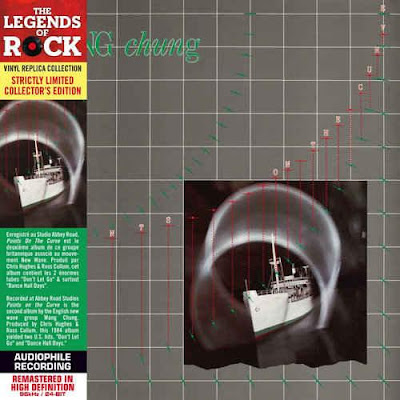
POINTS ON A CURVE

MOSAIC


